Workingmen's

Workingmen's

Wednesday, December 10, 2014

Reflection

Signing up for this class I had a minimal understanding of what the focus of the class would be on. I knew there was much more knowledge I needed to grasp race and labor especially when it came to other groups besides the usual concentration of African American's and Latino laborers. As the class progressed I realized I had no knowledge of race, labor, and migration as all intersecting concepts. This class concentrated on a lot of different aspects of all the ideas from different races, oppressed and oppressors, and sexes, which breaks these concentration into deeper ideas that I had never even thought of. Combination of proletariat Literature, articles, and class discussions I was able to have multiple times an eye opening to ideas that I would haven't even thought of as sources that lead on to political problems we have today. 
From Kindred's brutal details of the haunting life as a slave to Bulosan's true account of the horrific obstacles he went through I was able to get a better perception of the challenges that a person of color had to endure long before regulations for migrant workers had developed. Of course there is a long way to go before any sort of equality is spread along all people in this country but there I had seemed to miss the intensity of the brutality people had to go through before getting where we are today, I didn't realize I was even lacking this knowledge until this class. I got a better understanding of  people that have been fighting for what seem basic rights to me now and the fact that these struggles and changes where happening not too long before I even became a member of this world. Being able to go to school and not having to fight to be where I am but was an actual option for me to even go to school seems like something that I have never given much thought about, about how much effort it came from the Latino, women and women of color voices. 
I learned trails and tribulations from different groups around the world whether it be from a specific country, sex, or age. I saw that when people are oppressed and get together there is a difference that can be made. This difference is not necessarily made within one attempt to change or even within a decade of trying, there is serious work and thought that goes into any attempts of change and bettering for people. This class was insanely informative and there were so many voices and individuals that enriched the whole learning process which made observing that much more elevating. 

Reflection

I honestly take every class I can that has the word "race" or some permutation of it in the title. I am a feminist studies major because I care a lot about race issues and the way I am able to better understand the world through ideas connected to race. I came into this class with a lot of hopes and expectation for it, and it, but I am not sure how much (in a sense of arrogance) I considered the other voices that would be in the class. It was illuminating and awesome to hear from my classmates on their personal experiences with the issues that we discussed in class. I find it difficult to speak up in classes in general, but the bravery to talk about family and personal issues that have so long been invisiblized or demonized in society is incomprehensible to me. It really shows how real life what we're talking about is, how we can't pretend the last time revolution was on the table was in the 1960s, and the types of oppression going on today have greater effects than we might readily admit. It was also good to see the ways that people's perspectives changed throughout the quarter, a lot of people began the class new to the university or to literature or to classes around race and labor issues and looking at our discussions now they are so nuanced with different perspectives and ideas. I think the constant loop back to class consciousness was also really great and important, considering the ways we often try to understand one of the other, without the ways they are undeniably intertwined. I am happy to think about the web of conversations we have had, and the ways that they have evolved from the beginning of the course, especially with the demonstrations for rights going on around the world and on this very campus in the last couple of weeks. I hope we can all take this class and put its ideals into practice in our futures, myself very much included.

"I will be a writer and make all of you live again in my words." (Tem's Reflection)


It is very easy for me to come into a class thinking I am well-versed with a topic that I am so passionate about. However, Christine’s class always finds a way to create insightful dialogue with the people around me so that there are multiple ways for me to gain knowledge. The overarching topic of race, labor, and migration are so compelling to me that every time I step into class, I do so with an open mind so I can absorb everyone’s contributions.

Starting from the first few weeks of the class, I knew very little about Marxist ideals and literature. The different articles pertaining to wages and labor gave me a solid foundation of what I needed to know for the literary works in the course. It never occurred to me that capitalism has a way of taking a minimalist approach in paying their workers the minimum amount just to survive and work another day. This is a powerful concept because it resonates with a lot of past and previous labor.

With that foundation, I was already hooked with Kindred as it is an Octavia Butler work. I found this book to be a quick read and just reinforced everything I learned about slavery. Butler’s sci-fi approach makes it intriguing to analyze as temporality plays a key part in the story. A slave narrative like this book made me realize the horrors of being a person of color returning to a past of physically and mental abuse. While we have make leaps progressively, we are still far from where we can be in terms of our “post-racial” society.

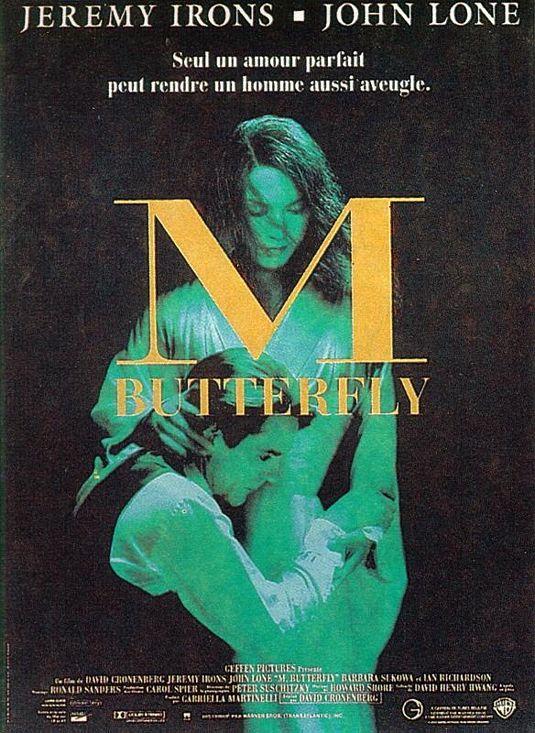
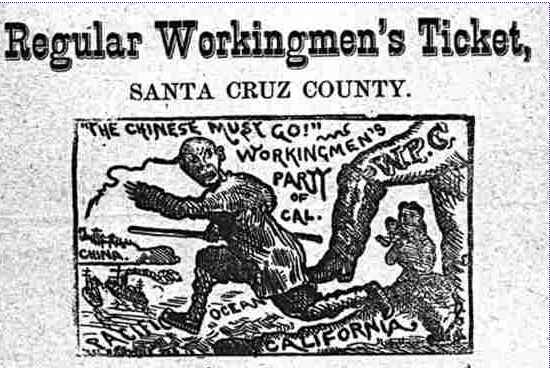
Something I am unfamiliar with was the coolie how the need for their labor was in part due to post-slavery. I knew very little about the Asian labor, specifically Chinese, other than they helped built the railroads. The dynamics of de-gendering and feminizing their labor reminds me of M. Butterfly. This confusion of the sexes made it easy for capitalists to oppress the labor of the coolie. One thing that helped me with this particular section is my political thought background and the Lockean notion of property. Understanding that while one’s own work means one is deserving of the fruits of that labor was not the case, especially for the Chinamen.

http://graphics8.nytimes.com/images/2012/10/19/us/FILIPINO-1/FILIPINO-1-articleLarge.jpgOn a contemporary standpoint, understanding the bracero program and the primary Latino workforce made me recognize that our fight is still going. In my organization, I always emphasize that the UFW would not be powerful if the Filipino and Latino workers were not in solidarity with each other. While our histories are different (being a little brown brother vs. alienation), the paths will always intertwine. NAFTA, globalization, neoliberalism, the core/periphery…all of these attribute the unfair practices and exploitation of the immigrants toiling over the land and the workers in Central America.

As for Bulosan…well I can write a whole paper on that. ;)

One of the most powerful-est things I've learned is that literature like the proletarian novels we've read...give a voice to the voiceless. When words and stories can be preserved and retold again, that's where people can reflect and build off the past. Even if memories become a commodity like in Sleep Dealer, you can't truly put a price on the past.

Reflection

When I first registered for this class I wasn't sure what to expect but the topic intrigued me. I have taken a variety of sociology classes which have discussed race, law, and the effects of capitalism. I also had learned about how race, class and gender always seem to interlock but this class gave me a different perspective on the same topics. When I learned about Scottsboro it wasn’t introduced to me as a movement in the workforce. I was unaware of the solidarity and work movement that this case had enlightened; I only knew it as a racially profiled case. In most classes we would only read articles like the ones that were provided in the reader but I feel that pairing those articles with books of authors who have experienced the events themselves gave me a deeper understanding of what was really going on.
It was interesting to learn about the different struggles that African Americans, Mexicans, Chinese and Japanese had to go through. In the end I learned that they all had similar experiences and they were purposely set up to compete with each other in the work force. The way that they were treated and the laws that were set up to make sure that they remained dependent definitely has an effect on the way certain races are perceived today.

Overall this class was very interesting and I feel that it set up a good foundation for us to understand what is going on today with current events such as the Ferguson protests and will help us better understand future events. There was a lot of reading but all of the articles and books went hand in hand. This was a great class and Christine has a lot of knowledge in the topic she teaches and continuously connected issues that occurred years ago with current events.

Are Our Hands Clean? A Final Reflection

Our class has really made me step back and try to view the world objectively. When reading our primary and secondary texts, I couldn't help but feel overwhelmed with the true history of racial oppression, mass racial violence, slavery, labor & labor power, capitalism, US Foreign policy, "whiteness" as a construct, disposability in regards to labor forces, labor units, gender politics, reproductive labor, biopolitics & biopower, invisibility, queering of male Asian American immigrants, "the stranger", rape, lynchings...I think the list could go on for quite a while. All of these concepts have made me realize that the society we live in is incredibly flawed because the country we live in has been constructed on an insecure foundation of racial injustice and incredible racial oppression. I have learned so much about these three central concepts of race, labor and migration through the proletarian voices and narratives that have emerged through the centuries of working class men and women, speaking to the world about their lives and their struggles to find their means of subsistence. I have come to realize that poverty is cyclical and how imperialism and capitalism divide the world.

I have enjoyed the analysis of race, labor and migration provided by many of our classmates and I really admire how many of you can eloquently express your feelings and thoughts in regards to this big picture. I definitely learn something new every class just by listening to many of you speak and I am very grateful that I got to spend this quarter with such knowledgeable and insightful people. To Christine, thank you like always, for providing us with the resources we need to understand how and and why America is the way it is. Of course I keep asking myself, if our hands are clean in regards to the events history has provided and our role in reading, conceptualizing and critically thinking about all of the elements that have influenced people of color and people of labor....I have yet to formulate an answer...but this class has indeed helped me step closer to an answer.

reflections

I had no idea what I was getting myself into. I was familiar with the topics or themes solely based off of the course title,race, labor and migration, but my knowledge of these topics were limited and based on one other college course, high school history classes, personal experiences or word of mouth. Ferguson and the many happenings it has sparked has contextualized the course material to a very (and an unfortunately) real degree, real in that the course material remains important, real in that it remains relevant.

This course has helped me understand that the construction of this country has been built on the migrant laborers, the colonized, the displaced—that this country's foundation is credited to the millions of people who continue to be racialized and therefore, marginalized. This is just one of the many "aha" moments that have clicked and that have clicked so easily at that—the course provided a comfortable, easy setting where discussion rendered an understanding of key concepts more accessible than a top-down, professor-to-student approach.

This course has also helped further my personal interest and future research on constructions of identity within this country, factored strongly by racial, labor, and/or migratory conditions. I've come to understand how these identities have been constructed and then ascribed to the marginalized by the white, capitalist institution, the oppressor. All in all, I leave with an immense gratitude. This course has made me grow as both a critical thinker and a privileged citizen, as the knowledge I've gained has helped me keep an open eye to the injustices of this county, past, current and continuing.


Final Thoughts on LTWL109


This class has been a blessing and a curse. I've learned such deeply fascinating and morbidly depressing things from the readings and class discussions. Eye opening facts on the history of human society. It's become progressively difficult to refrain from constant conspiracy theorizing on the "mechanisms of the capitalism machine." It has also allowed me to appreciate the strides modern society has made with human rights whilst still acknowledging how far we still have to go.

One of my first observations on the overall narrative of our class was the repetitive, almost cyclical nature of our human history. Slaves, surfs, sharecroppers, wage slaves. Those in power have been maintaining such power through subversive and overt stripping of humanity from those without power. All for the sake of maintaining and increasing their own power. Reading about the african slave ships being shortly followed by the coolie "free laborer" ships in the post emancipation era only to then be mutated into the mass import and exportation of the bracero Mexican laborers. Even as we moved forward through history in our readings, the deeper narratives hardly changed. The constant separation and guided segregation of peoples for the benefit of the "masters."

There is an apparent burden of knowledge I feel, but it is in many ways empowering. There is also a narrative of a progressive empowerment of the people as time moves forward. Compared to just 50 years ago the US has vastly increased its human equality index. The struggle is constant but I believe the world truths are becoming more accessible to the masses through the new powers of worldwide global communication online.

There is still a candle in the dark chapel we sleep in. Though the winds may bellow, by standing together we may keep alight the flame.